Key Takeaways
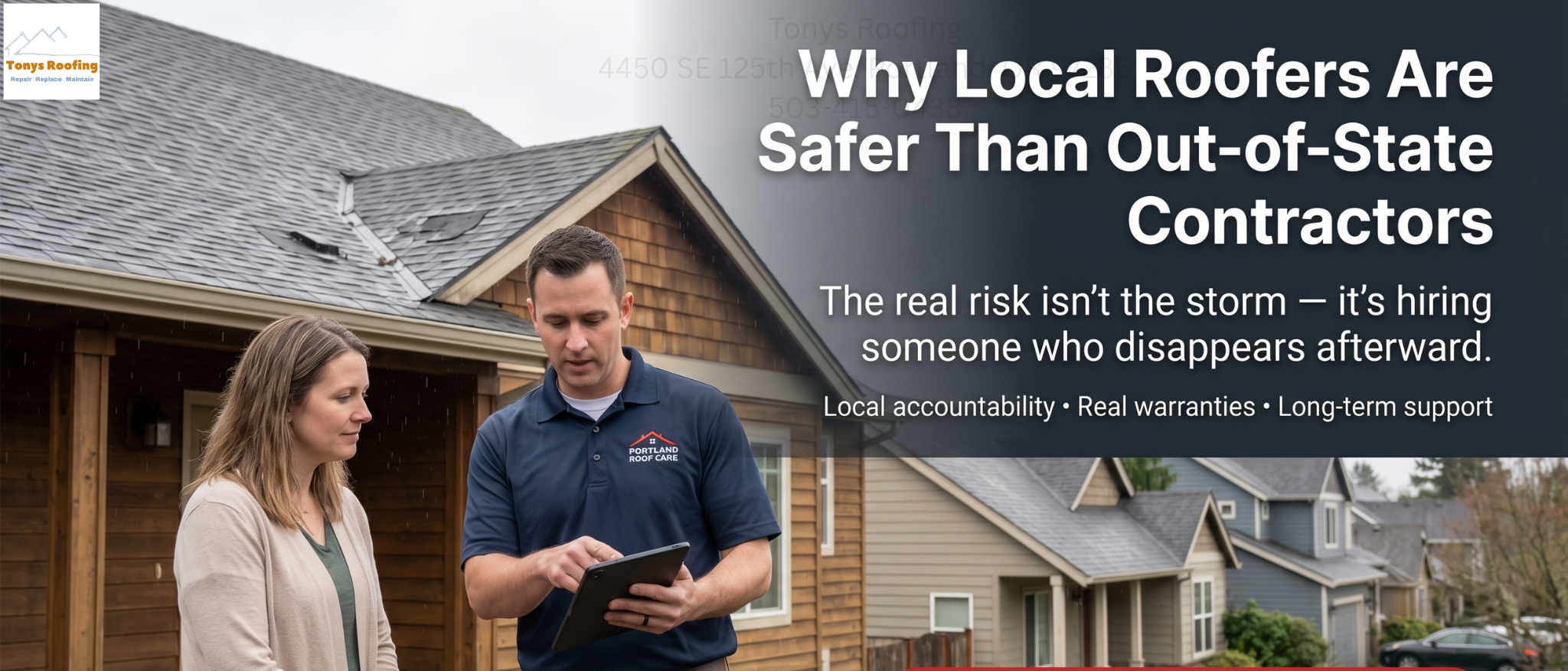
- The biggest risk with out‑of‑state or storm‑chaser roofers is lack of accountability, not speed.
- If a contractor can’t be found later, their warranty may be worthless—no matter what it says on paper.
- Always verify license, insurance, local address, and references, and insist on a detailed written scope.
- Avoid door‑to‑door pressure, “sign today” discounts, and vague “free roof” promises.
- The safest next step is a photo‑documented inspection from a local roofer who will still be here years from now to answer the phone.
Accountability Matters More Than Promises
After a big storm, it’s normal to feel stressed when you see missing shingles, loose flashing, or a damp spot on the ceiling. That’s exactly when out‑of‑state “storm chaser” contractors show up—promising fast fixes, “free roofs,” and deals that expire today.
The biggest risk usually isn’t the damage you can see. It’s hiring someone who disappears once you’ve paid, leaving you alone with any problems that show up later.
You deserve a roofer who treats you like a neighbor—not a transaction.
Quick Answer: Why Local Is Safer
Local roofers are safer because they:
- Have local licenses, insurance, and a physical presence that’s easy to verify
- Rely on long‑term reputation, reviews, and referrals instead of one‑time storm work
- Are still here years later to honor warranties, fix issues, and answer the phone
Out‑of‑state contractors may or may not do good work, but if you can’t find them after the storm season ends, their promises and “lifetime” warranties are just paper.
Why Out-of-State Contractors Show Up (And When It’s Risky)
When storms hit, demand for roof repairs and replacements spikes overnight.
- Storm damage = sudden need – Homeowners want fast help, often all at once.
- Traveling crews follow storms – Some are legitimate companies; many are short‑term outfits set up to capture quick insurance work.
- The core issue is accountability – If they leave the area after the work is done, it’s hard or impossible to get warranty work, service calls, or even a returned phone call later.
Geography itself isn’t the enemy; disappearing contractors are. If a company can’t be found easily a year from now, you’re carrying all the long‑term risk.
Local vs. Out-of-State Roofers: Risk Comparison
Information Table #1: Local vs Out-of-State Roofer
| Category | Local Roofer (Accountable) | Out‑of‑State / Storm Chaser Risk |
| Warranty support | More likely to be reachable, with an office and staff nearby to handle issues years later. | May be gone once storm work dries up; hard to get callbacks or warranty help. |
| Licensing & compliance | Easy to verify through state and local registries; long‑term track record. | License may be new, from another state, or hard to verify; sometimes borrowed or misrepresented. |
| Insurance & liability | Easier to obtain and confirm up‑to‑date insurance certificates with local agents. | Coverage can be vague, expired, or held by a different entity than the one on your contract. |
| References | Local jobs you can drive by; homeowners you can actually call. | References may be out‑of‑state, unverified, or generic “sample” photos. |
| Communication style | Relationship‑driven; depends on reviews, referrals, and repeat business. | Often transaction‑driven and heavily scripted, focused on fast sign‑ups before moving on. |
| Pricing approach | More likely to present a detailed scope and realistic pricing based on local costs. | May lead with low initial bids, then rely on add‑ons, supplements, or scope changes later. |
| Knowledge of Portland roofs | Familiar with moss, moisture, wind‑driven rain, and tree debris challenges in our climate. | Often apply generic methods that don’t account for local conditions or common failure points. |
| Long‑term accountability | “Still here tomorrow” — local address, local suppliers, local reputation. | Company names, phone numbers, and crews may change frequently; hard to track accountability. |
How to Verify Any Contractor (Local or Not)
Whether a roofer is around the corner or from another state, the verification steps are the same. Local pros just tend to pass them more easily.
Information Table #2: Contractor Verification Checklist
| What to Verify | What to Ask For | What “Good” Looks Like |
| License | Oregon CCB license number; name the license is under. | Active license matching the company name, correct classification, and clean history in the Oregon CCB search. |
| Insurance | Certificate of insurance sent directly from their agent (not just a photocopy). | Current general liability and (ideally) workers’ comp with limits appropriate for roofing. |
| Local address | Physical office or shop location, not just a PO box. | Address that exists in Google Maps/online, consistent across the website, state records, and paperwork. |
| References | 2–3 recent local homeowners you can call. | Reachable people who confirm the company’s work and communication, ideally within your broader area. |
| Written scope | Line‑item estimate with scope, materials, flashing, ventilation, decking policy, and cleanup. | Detailed, plain‑English document that another roofer could follow; no one‑line “replace roof” quotes. |
| Warranty | Written terms for workmanship and materials. | Clear durations, what’s covered, and who to contact if there’s an issue; not just “lifetime” without details. |
| Change‑order policy | Explanation of what happens if hidden damage is found. | Written process: photos, explanation, and homeowner approval before extra work is done. |
Inline CTA: Want a local pro to confirm storm damage and walk you through this checklist? Schedule a free, photo‑documented inspection before you sign anything.
Common Storm-Chaser Tactics and Red Flags
You don’t have to memorize every trick—just know the patterns. Common warning signs include:
- “Free roof” or “insurance will pay for everything” promises
No contractor can guarantee coverage before your insurer reviews a claim. - High‑pressure door‑to‑door sales after storms
Showing up uninvited with clipboards and insisting your roof is “urgent” before they’ve really inspected it. - “Sign today” discounts or expiring offers
Urgency is a classic pressure tactic; legitimate estimates don’t evaporate overnight. - Asking to be listed as your contractor on the insurance claim form immediately
They may try to “lock in” control of your claim before you have time to compare bids. - Unwilling to provide license, insurance certificate, or local references
Or they dodge the question, saying “we’ll take care of everything.” - Vague company identity
Changing names, no real online presence, or only generic website content with no local projects. - No clear written scope
One‑line estimates, no mention of flashing, ventilation, decking, or cleanup.
If you’re feeling rushed or confused, that’s a sign to pause.
Why “Still Here Tomorrow” Matters So Much
A roof isn’t a one‑day relationship. What happens after the crew leaves matters just as much as day one.
Local, established roofers are better positioned to:
- Stand behind workmanship warranties – If something small shows up in the first few years, you know who to call.
- Help with warranty paperwork – Registering enhanced manufacturer warranties and advising you on how to keep them valid.
- Handle repairs and maintenance later – From a loose shingle to a flashing tweak, you’re not calling a 1‑800 number hoping someone still answers.
- Respond to future storms – They’re here for the next storm, too—not just this one.
If a contractor won’t be around to see how their own work holds up in Portland’s climate, they have less incentive to do it right.
What to Do if Someone Knocks on Your Door After a Storm
You don’t have to be confrontational. Use a simple script and process:
- Stay calm and don’t sign anything at the door.
Thank them for stopping by and let them know you’re collecting information. - Ask for their CCB license number and insurance certificate.
A legitimate contractor will have this handy and won’t be offended by the question. - Ask for a local address and 2–3 recent local references.
Write them down; don’t just accept “we’ve done lots of work in your area.” - Tell them you’ll review everything and get multiple estimates.
“We always compare a couple of quotes before deciding. We’ll reach out if we’d like an estimate.” - Schedule a photo‑documented inspection with a local roofer you choose.
Ideally, someone with established roots and a clear estimating process. - Compare quotes using a checklist.
Make sure you’re looking at scope and details—not just the lowest number.
If a door‑knocker pushes back against this process, that’s your answer.
FAQs: Local vs Out-of-State Roofers
Are all out-of-state roofers “storm chasers”?
No. Some established companies do travel for large projects. The concern is whether they maintain a presence and support in the area after the initial rush of work is finished. If they can’t be easily contacted later, you carry more risk.
How do I verify a roofer’s license and insurance in Oregon?
- Look up their CCB license number on the Oregon Construction Contractors Board website to confirm status and classification.
- Ask their insurance agent to email you a certificate of insurance directly.
- Confirm that the company name on the license, insurance, and contract all match.
Will insurance pay for storm damage to my roof?
In many cases, yes—if damage is sudden and storm‑related—but details depend on your policy, deductible, and insurer. It’s always best to call your insurance agent directly before signing anything, and be cautious of contractors who promise coverage they can’t guarantee.
What should I do if I already signed something with a door-knocker?
- Read what you signed to see if it’s a contingency agreement, authorization to represent you to insurance, or a full contract.
- If you’re uncomfortable, contact an attorney or consumer protection agency about your options.
- You can still schedule a local inspection to get a second opinion on the roof’s actual condition.
What’s a reasonable deposit and payment schedule?
Practices vary, but many reputable roofers:
- Take a modest deposit to secure scheduling and materials
- Collect the balance upon substantial completion or in clear stages
Avoid paying most or all of the money upfront.
How can I tell if a quote is missing important items?
Use a comparison checklist and look for missing details on:
- Tear‑off layers
- Underlayment and flashing
- Vent boots and ventilation plan
- Decking allowance/change‑order policy
- Cleanup and warranty details
Why do storm chasers push people to file claims quickly?
Storm‑chaser models often depend on high claim volume and fast sign‑ups before homeowners have time to compare options or calm down. Pushing urgent claims and same‑day signatures is part of that playbook.
What makes a local roofer more accountable?
- Local reputation and reviews they rely on for future business
- Relationships with local suppliers and inspectors
- The fact that they’ll likely drive by their past jobs for years—and see how their work holds up
- You can walk into their office or shop if needed
Ready for a Safe, Straight‑Forward Next Step?
You don’t have to figure this out alone—or feel like you’re being sold at every turn.
Get an Honest Roof Evaluation (No Pressure)
- Family‑owned, serving Portland for decades
- Licensed & insured
- Photo‑based findings + plain‑English explanations
- We’ll tell you if a repair is enough—and if things look good, we’ll say that too
Request My Free Roof Replacement Quote
When you’re ready to take the next step, give us a call. We’re here to help.
Tonys Roofing Contractors
Homeowners in Portland want to be ensured that they can get the best price roof installation for the best value. At Tonys Roofing LLC our work will always exceed our price. We want to make sure you get the best value your home deserves.
Location:
Tonys Roofing
4450 SE 125th Ave
Portland, OR 97236
https://maps.app.goo.gl/h49HQruzvXEa6aWG7
Connect with us: